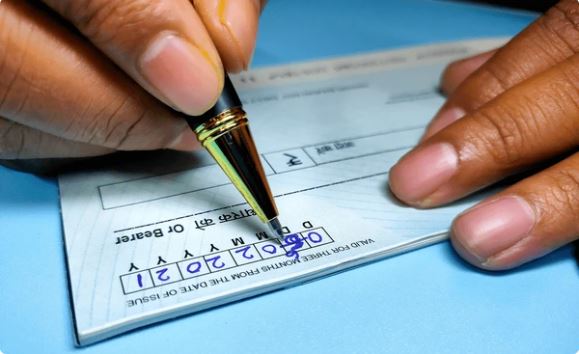
In the world of business transactions, a cheque is often seen as a symbol of trust, a signed promise that money will follow. But what happens when that promise collapses? For decades, cheque dishonour has been treated as a serious offence under Indian law, leading to criminal prosecution and a long, often tedious legal battle.
However, with the emergence of the Insolvency and Bankruptcy Code (IBC) in 2016, creditors have found a more structured, time-bound remedy to address non-payment issues, corporate insolvency. And recently, the National Company Law Tribunal (NCLT) Mumbai has once again reinforced that the IBC avenue cannot be blocked merely because cheque dishonour litigation is pending.
This clarity comes from the case of Rexel India Pvt Ltd v. Proto D Industries Pvt Ltd, a dispute that highlights how insolvency law now takes precedence when default is clear, no matter how many legal distractions the debtor tries to raise.
The Case in Focus: Rexel India vs Proto D Industries
Rexel India supplied materials to Proto D Industries in 2023. Credit terms were agreed, invoices were raised, and liability was acknowledged. When payments didn’t come through, Proto D issued several cheques, but every one of them bounced. Payment stopped, literally and figuratively.
To make matters worse (or clearer, depending on how you look at it), Proto D’s own directors signed an undertaking acknowledging dues exceeding ₹6 crore, yet no payment followed. Rexel finally initiated insolvency action under Section 9 of the IBC, claiming an operational debt default of around ₹5.82 crore.
Proto D pushed back. Their argument? A cheque-bounce case under the Negotiable Instruments Act, 1881 (NI Act) was already underway in Pune, meaning, they argued, Rexel could not simultaneously initiate insolvency proceedings.
The NCLT Mumbai strongly disagreed.
IBC vs Cheque Dishonour: Not a Tug of War
The tribunal examined the nature of proceedings under both laws:
Cheque Dishonour Case (NI Act) |
Corporate Insolvency (IBC) |
| Penal/quasi-criminal in nature | Civil and economic in nature |
| Focus: Punishment for dishonour | Focus: Resolution of default |
| Concerned with the offence of dishonoured cheques | Concerned with the financial health of a company |
| May lead to fine/imprisonment | May lead to revival/liquidation |
While cheque dishonour cases can drag on for years, IBC mandates strict timelines, forcing swift resolution. The tribunal held that ongoing criminal-type proceedings cannot shield a defaulting company from insolvency.
In simpler terms, just because the cheque bounced and the case isn’t over, doesn’t mean the insolvency process must wait. This ruling reinforces the now-well-established legal principle IBC is a distinct remedy and operates independently of cheque dishonour litigation.
Why the Tribunal Ruled in Favor of Rexel
The NCLT found three key issues in Proto D’s defence:
- Debt was clearly acknowledged: The debtor’s directors had signed an undertaking confirming dues, leaving no room for dispute.
- Allegations of defects were “afterthoughts”: Proto D claimed later that materials were defective, but showed no evidence that such issues were ever raised at the time of supply.
- No final adjudication in NI Act proceedings: For res judicata to apply, there must be – the same parties, the same subject matter, the same issues, and a final adjudication. Neither of these were applied.
Thus, the tribunal admitted the case, declared a moratorium, and kick-started the corporate insolvency process. An Interim Resolution Professional (IRP) was appointed and a public announcement of the corporate insolvency resolution process (CIRP) was issued in late 2025.
Why This Case Makes an Impact
This ruling has several significant implications for India’s insolvency landscape. Firstly, it strengthens the role of the Insolvency and Bankruptcy Code (IBC) as a faster and more effective recovery mechanism. Creditors often find themselves tied up in cheque dishonour litigation, which is known to be time-consuming, uncertain in outcome, and frequently exploited by debtors to delay repayment. By allowing insolvency proceedings to move forward despite a pending cheque-bounce case, the Tribunal has reaffirmed that creditors can escalate matters under the IBC when swift financial recourse is necessary.
Additionally, the decision prevents corporate debtors from using cases under the Negotiable Instruments Act as a shield against insolvency actions. Companies have historically relied on cheque-bounce disputes as a strategic barrier to avoid or stall payment obligations. The NCLT’s ruling makes it clear that the existence of NI Act proceedings does not suspend or override IBC proceedings. In other words, debtors can no longer hide behind procedural tactics to evade accountability once default is established.
Finally, this judgment supports India’s broader credit culture by reinforcing the core objectives of the IBC, to revive distressed businesses wherever possible, protect the rights of creditors, and ensure the efficient resolution of legitimate financial disputes. By upholding the priority of insolvency proceedings over delayed litigation, the ruling promotes financial discipline in the corporate sector and strengthens trust in commercial transactions.
A Shift in Legal Strategy for Creditors
Before IBC, cheque dishonour was among the primary remedies available to a creditor.
NI Act |
IBC |
|
|
Cheque dishonour punishes, IBC solves.
End of Treating the Cheque as a Safety Net
The cheque once symbolized credibility. Today, a bouncing cheque isn’t just a legal violation, it’s a major insolvency trigger. Indian business law is evolving to protect genuine commerce, not tactical delay. And that evolution is pushing companies toward more responsible financial behavior.
The Rexel India vs. Proto D Industries decision reinforces the dominance of the Insolvency and Bankruptcy Code as India’s primary remedy for corporate debt recovery. Cheque dishonour cases may continue in parallel, but they can’t stall the machinery of insolvency law.
For operational creditors, vendors, service providers, distributors, this is a strong message of support – If your payment is overdue or cheques have bounced.
You can still trigger corporate insolvency under IBC.
And that might just be the push required to recover your dues, or to get the debtor’s business back on track.